
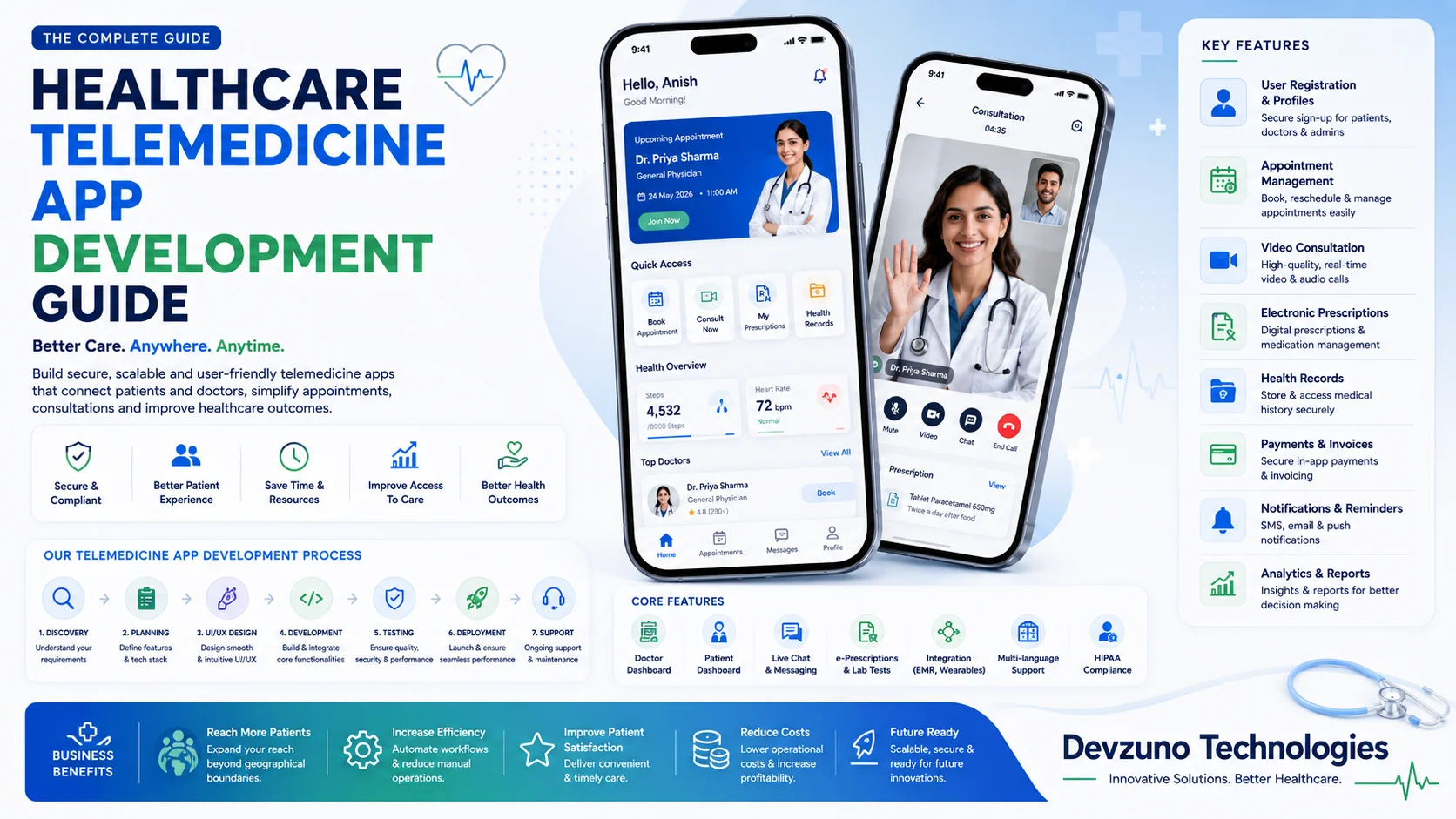
In 2026, digital healthcare delivery is standard practice for modern medical clinics, hospital networks, and digital health startups. Patients expect instant, secure video consultations from their smartphones, automated prescription refills, and self-serve access to their Electronic Health Records (EHR/EMR).
However, developing healthcare software involves strict regulatory compliance. A single data breach or non-compliant cloud architecture can trigger catastrophic HIPAA violation fines exceeding $50,000 per violation record alongside severe malpractice liabilities.
Building a custom, HIPAA-Compliant Telemedicine & Patient Portal ensures bank-grade end-to-end encryption, automated doctor appointment scheduling, and frictionless insurance billing.
This executive guide outlines the technical security architecture, EHR integration standards (HL7/FHIR), and development investment in both $ USD and ₹ INR (Rupees) without any code.
1. Core Modules of an Enterprise Telemedicine Platform
Sub-second latency, peer-to-peer AES-256 encrypted HD video and audio sessions with zero third-party data recording leakage.
Seamless FHIR / HL7 API synchronization with Epic, Cerner, AthenaHealth, and custom hospital databases.
Automated digital prescription generation, drug interaction safety checks, and direct routing to partner pharmacy fulfillment hubs.
Instant eligibility verification against health insurance providers and automated credit card co-pay processing.
2. HIPAA Compliance Checklist: The 4 Security Safeguards
End-to-End Encryption at Rest & In Transit
All Protected Health Information (PHI) encrypted with AES-256 and TLS 1.3 encryption across all database records and network calls.
Signed Business Associate Agreements (BAAs)
Executing formal BAAs with every cloud provider (AWS, Google Cloud, Twilio, Stripe) before storing or transmitting patient data.
Immutable Audit Logging
Recording every single time a physician, nurse, or patient views or exports a medical chart for 7-year regulatory compliance.
Role-Based Access Control (RBAC) & Biometrics
Doctors only access their assigned patients; multi-factor biometric Face-ID required on all mobile logins.
3. Telemedicine Portal Development Pricing (USD & INR)
$18,000 – $32,000
₹15 Lakhs – ₹26.5 Lakhs
Doctor appointment scheduling, secure WebRTC video room, patient profile management, and Stripe payments in 8 weeks.
$38,000 – $78,000
₹31.5 Lakhs – ₹65 Lakhs
FHIR / HL7 EHR integration, e-prescriptions, multi-specialty triage, automated insurance checks, and lab report attachments.
$75,000 – $140,000+
₹62 Lakhs – ₹1.15 Crore+
Unified doctor/patient web portals + native Flutter mobile apps + remote patient monitoring (RPM) Bluetooth IoT sync.
4. Build Your Digital Health Platform with Devzuno
Deliver compassionate, secure healthcare that meets the highest compliance standards.
At Devzuno Technologies, our senior healthtech software engineers build robust, HIPAA-compliant patient portals and telemedicine applications with 100% intellectual property ownership.
👉 Request a Telemedicine Scoping Session with Devzuno today.